SecureFi.AI
Help
Plain-English guidance, trusted resources, and practical steps to stay safer before and after something suspicious happens.
About SecureFi.AI
SecureFi.AI is a personal risk intelligence platform for individuals and families. It helps people identify fraud, scams, fake sources, data breach risks, and digital deception before they act — using real-time threat alerts, AI-powered guidance, source verification, and clear next steps.
SecureFi.AI can also be offered by employers, membership organizations, financial institutions, legal firms, and community partners as a digital safety resource for the people they serve.
How SecureFi.AI works
Paste or describe a situation
Paste a message, link, or describe what happened. SecureFi.AI never sees your passwords, MFA codes, or financial account numbers — only the text you choose to share.
SecureFi.AI analyzes it against known patterns
The check-in engine compares your input against a library of fraud and scam patterns — phishing, impersonation, urgency tactics, spoofed senders, and more. It also checks active threat alerts from government agencies.
You get a verdict and specific guidance
Every result includes a verdict (Do Not Act Yet / Verify First / Appears OK), a confidence score, and a step-by-step action list — what to do, what not to do, and how to verify through a safer channel.
You decide — SecureFi.AI is guidance, not a guarantee
SecureFi.AI is not a substitute for professional legal, financial, or security advice. It is a fast, structured second opinion to help you pause and think before you act.
What each verdict means
🔴 Do Not Act Yet
Strong indicators of a scam, phishing attempt, or dangerous impersonation. Pause completely. Do not click, reply, pay, or share any information until you verify through a trusted channel you initiate yourself.
🟡 Verify First
There is not enough information to act safely, or the situation has mixed signals. Do not act on what was sent to you. Instead, go directly to the organization through a number or website you look up independently.
🟢 Appears OK, Still Verify
The pattern is consistent with a legitimate message or situation, but SecureFi.AI cannot guarantee it. Never use a phone number or link from the message itself — look up the contact independently before responding.
Understanding the confidence score
Every verdict includes a confidence score from 0 to 100. It reflects how many and how strong the matching signals are — not how dangerous something is.
80–100
Strong match
Multiple high-confidence signals align. The verdict reflects a well-established pattern.
60–79
Moderate confidence
Several signals match but the picture is not complete. Treat the verdict as directional, not conclusive.
0–59
Low confidence
Limited signals or conflicting information. Verify through a trusted channel regardless of the verdict label.
What can SecureFi.AI help with?
Paste a message, link, call description, or situation into the Check-In. SecureFi.AI recognizes patterns across all of these threat types.
📱 Phishing & Message Scams
- Fake bank texts
- IRS email impersonation
- Package delivery smishing
- LinkedIn DM scams
💰 Financial Fraud
- Investment scams
- Pig butchering / crypto
- Wire transfer fraud
- Fake invoice & billing
🪪 Identity Theft
- SSN misuse
- Tax identity fraud
- Medical ID theft
- SIM swap attacks
📞 Impersonation Calls
- Fake IRS / SSA calls
- Bank "fraud department"
- Tech support scams
- Utility shutoff threats
🔐 Account & Breach Risk
- Data breach exposure
- Password reuse risk
- Account takeover
- Credential stuffing
🤖 AI-Generated Fraud
- Voice cloning scams
- Deepfake video calls
- Fake AI citations
- QR code phishing
👨👩👧 Elder & Family Scams
- Grandparent scams
- Romance fraud
- Caregiver exploitation
- Fake family emergency
🧳 Travel & Location Safety
- Travel advisories
- Vacation rental fraud
- Cruise-line impersonation
- Fake visa notices
💊 Health & Medicare Fraud
- Medicare impersonation
- Fake prescription offers
- Medical billing fraud
- Health insurance scams
🏠 Physical & In-Person Safety
- Contractor fraud
- Door-to-door impersonation
- Marketplace meetup scams
- Disaster-relief fraud
🚨 Exploitation & Coercion
- Sextortion
- Deceptive job recruitment
- Romance-to-control tactics
- Labor trafficking warning signs
🔗 Suspicious Links & Domains
- Spoofed websites
- Typosquatting domains
- Fake login pages
- Malicious QR codes
Where to report, in the order that usually matters
You do not need to run a check-in first. If something has already happened, start here.
- Your bank, card issuer, or payment app, especially if money moved.
- FBI IC3 and the FTC.
- Your state Attorney General and local police when appropriate, or when you need a report number.
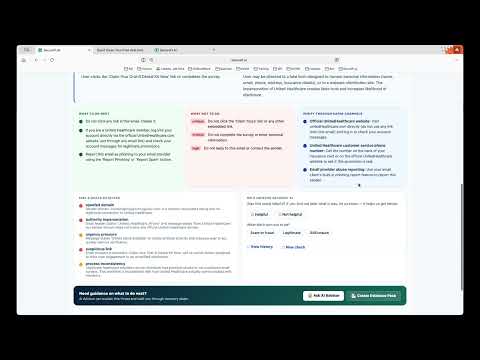
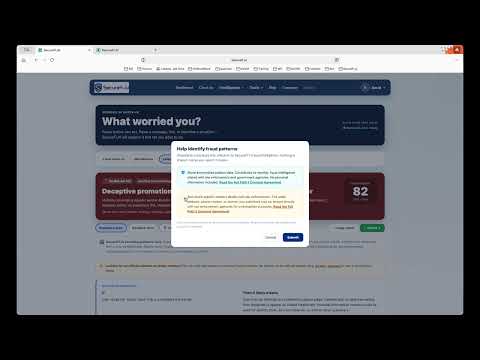
How-to videos
YouTube channel ↗



Frequently asked questions
Is my data private?
▼Does SecureFi.AI store the messages I paste?
▼What does the confidence score mean?
▼Can SecureFi.AI be wrong?
▼What should I do if SecureFi.AI says 'Do Not Act Yet'?
▼What is a 'safer channel'?
▼Can I use SecureFi.AI to help a family member?
▼What threat sources does SecureFi.AI use?
▼The SecureFi.AI platform
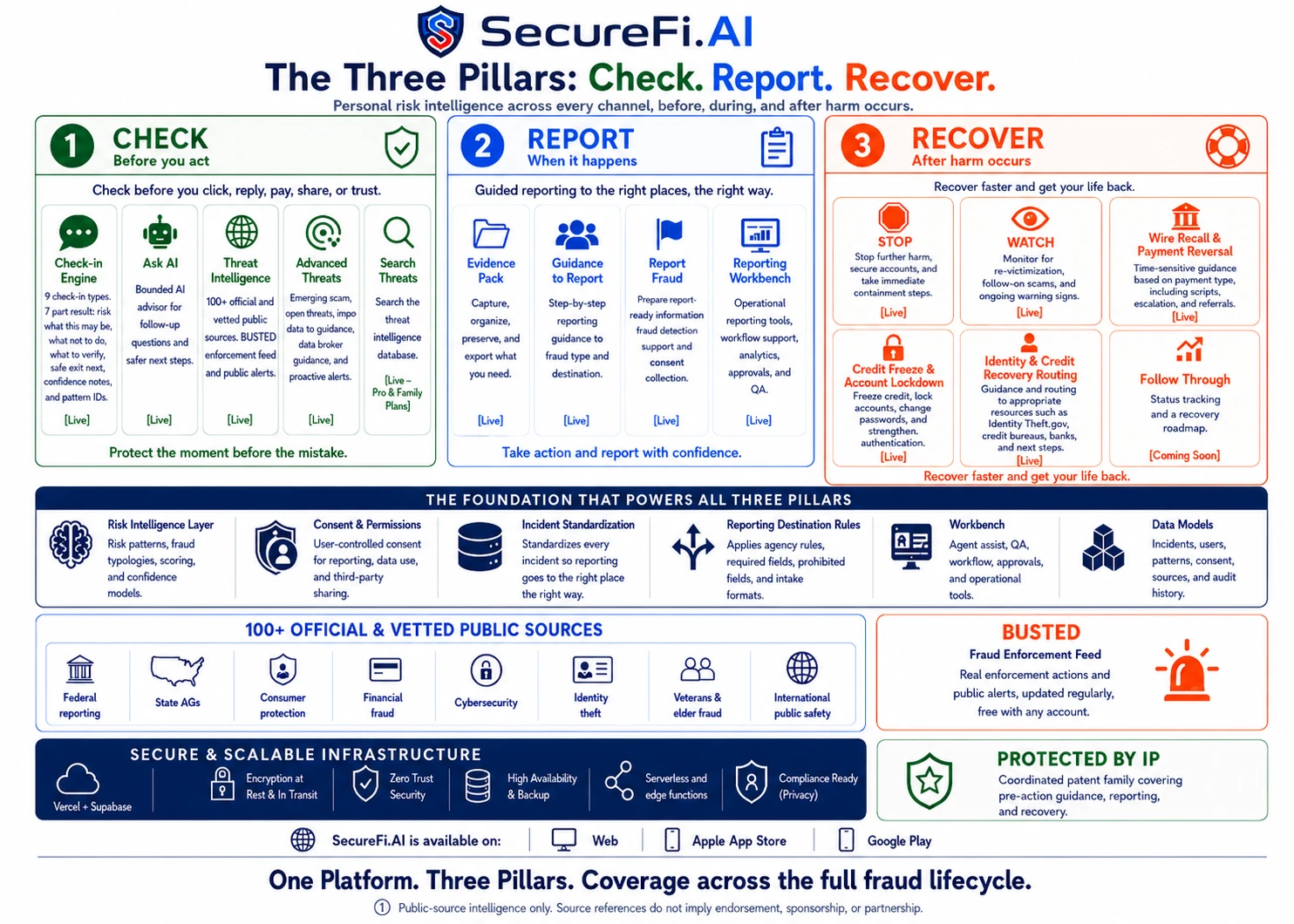
Tap the graphic for the full platform overview.