Before Thanksgiving, Check What's Already in Your Kitchen
Recalled foods. Search results that install malware. A Medicare decision with a December 7 deadline.
In brief
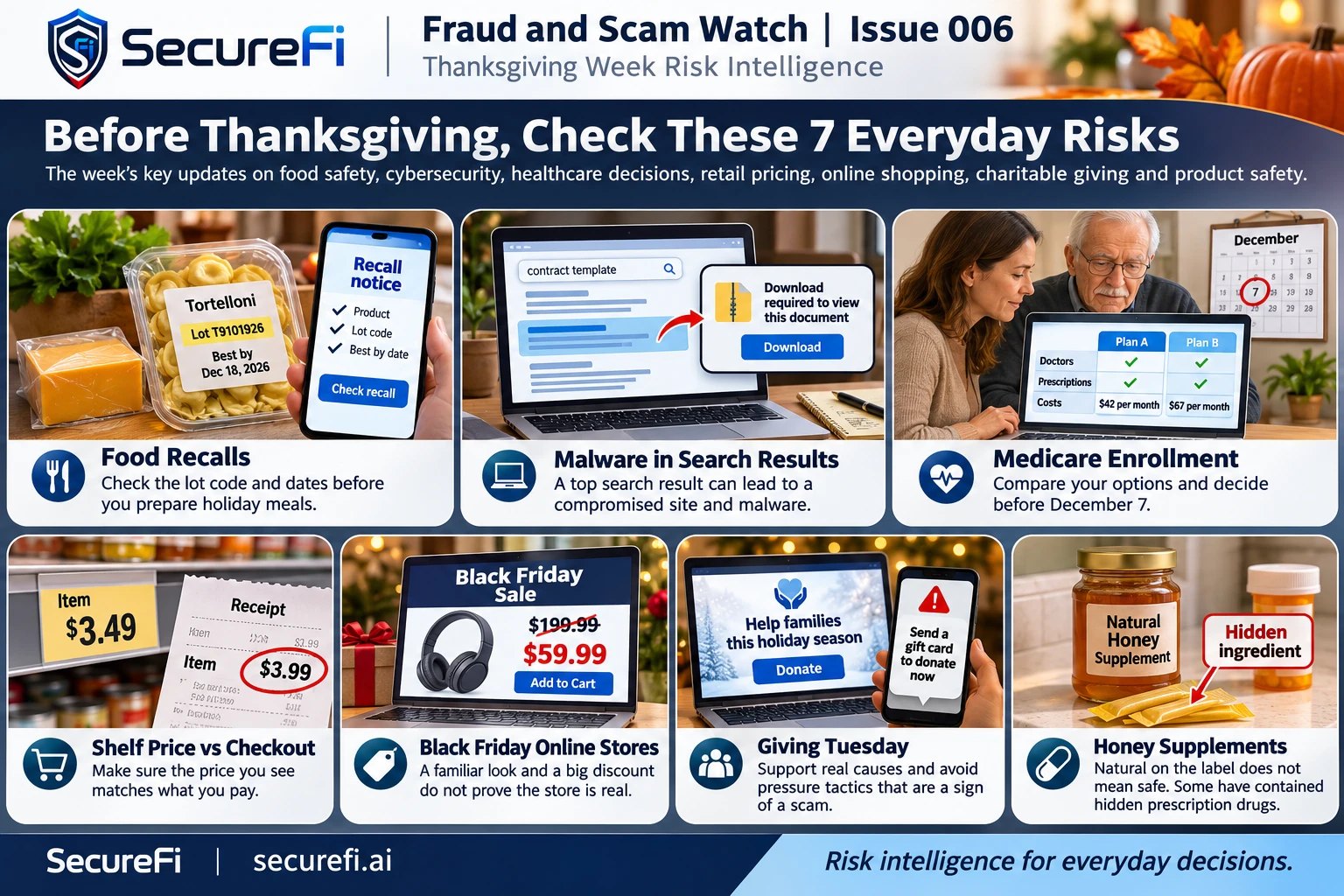
- Food recalls: Check what's already in your refrigerator. ALDI recalled two Priano refrigerated tortelloni products sold in four Southern states, and Family Farmstead Dairy recalled its raw cheddar, sold in 12 states including New Hampshire and most of the Northeast, for the second time this fall.What you can do: Match the brand, size, lot code and date on your package against the official notice before you cook.
- Search results: A result you found yourself can still be dangerous. The Justice Department disrupted Gootloader, malware spread through poisoned search results, and the FBI published an advisory on how it worked.What you can do: Get documents and software from the original source, and don't run a file a website tells you to run just to read a document.
- Medicare: Open Enrollment ends December 7. People with Medicare can review and change their coverage for 2027. Changes take effect January 1.What you can do: Check doctors, prescriptions and total costs at Medicare.gov or 1-800-MEDICARE before you switch.
- Store pricing: The shelf price may not be the checkout price. The FTC and 17 states announced a $63 million settlement with Family Dollar, and Missouri reached a $5.3 million agreement with Dollar General.What you can do: Compare your receipt with the shelf price, and keep proof when they differ.
- Black Friday: A familiar name doesn't prove a website is real. The FTC warns that fake shopping sites can appear in search results, including paid ads.What you can do: Type the store's address yourself, and search an unfamiliar seller's name with "complaint" or "scam" before you pay.
- Giving Tuesday: Make sure the charity gets your donation. Giving Tuesday is December 1. Some appeals imitate real charities or pressure people to give before they can check.What you can do: Look up the charity yourself and give through a website you found on your own.
- Health products: "Natural" honey products can hide prescription drugs. FDA testing has found sildenafil or tadalafil in some honey-based products sold for sexual enhancement. This is a standing FDA warning, not a new recall.What you can do: Check the FDA's notices for the exact product and ask a pharmacist about interactions.
Thanksgiving week brings a familiar rush of decisions: what to serve, what to buy, which websites to trust, and how to prepare for the end of the year.
Some of the most important risks this week have nothing to do with a suspicious text or phone call. A food product already in your refrigerator may be subject to a recall. An ordinary search result can lead to malware. And a healthcare decision made under pressure can affect someone's coverage for the coming year.
This issue looks closely at three of those developments, followed by four shorter updates on store pricing, holiday shopping, charitable giving and product safety.
Our goal remains simple: help you recognize risks, verify information, and make better decisions before something goes wrong.
Three stories worth a closer look
Before Thanksgiving Dinner, Check the Recall List
Imagine preparing a holiday meal and discovering that something in your refrigerator was recalled days earlier.
The package may look normal. The food may smell normal. You may have bought it from a familiar store.
None of those details means a recalled product is safe.
What's happening
Two recent recalls show why the details matter.
Raw cheddar sold in 12 states
On November 10, Family Farmstead Dairy announced it is recalling its cheddar cheese products, 8-ounce Raw Mild Cheddar and Raw Sharp Cheddar, because they may be contaminated with Listeria monocytogenes. The recall covers all lot codes dated October 16, 2027, or earlier.
The cheese was sold through retail stores in New York, New Jersey, Vermont, New Hampshire, Massachusetts, Pennsylvania, Rhode Island, Connecticut, Delaware, Virginia, West Virginia and Tennessee.
This is the company's second cheddar recall this fall. On October 15, it recalled certain raw cheddar for possible E. coli contamination. The company says customers may return the cheese to the place of purchase or contact Family Farmstead Dairy at (607) 397-4044.
Refrigerated pasta sold in four states
On November 16, ALDI announced a recall of two refrigerated pasta products because they may not have been stored, distributed or sold at appropriate temperatures. According to the company's announcement, posted by the FDA on November 17, that could allow dangerous bacteria, including Clostridium botulinum, to grow.
The affected products are:
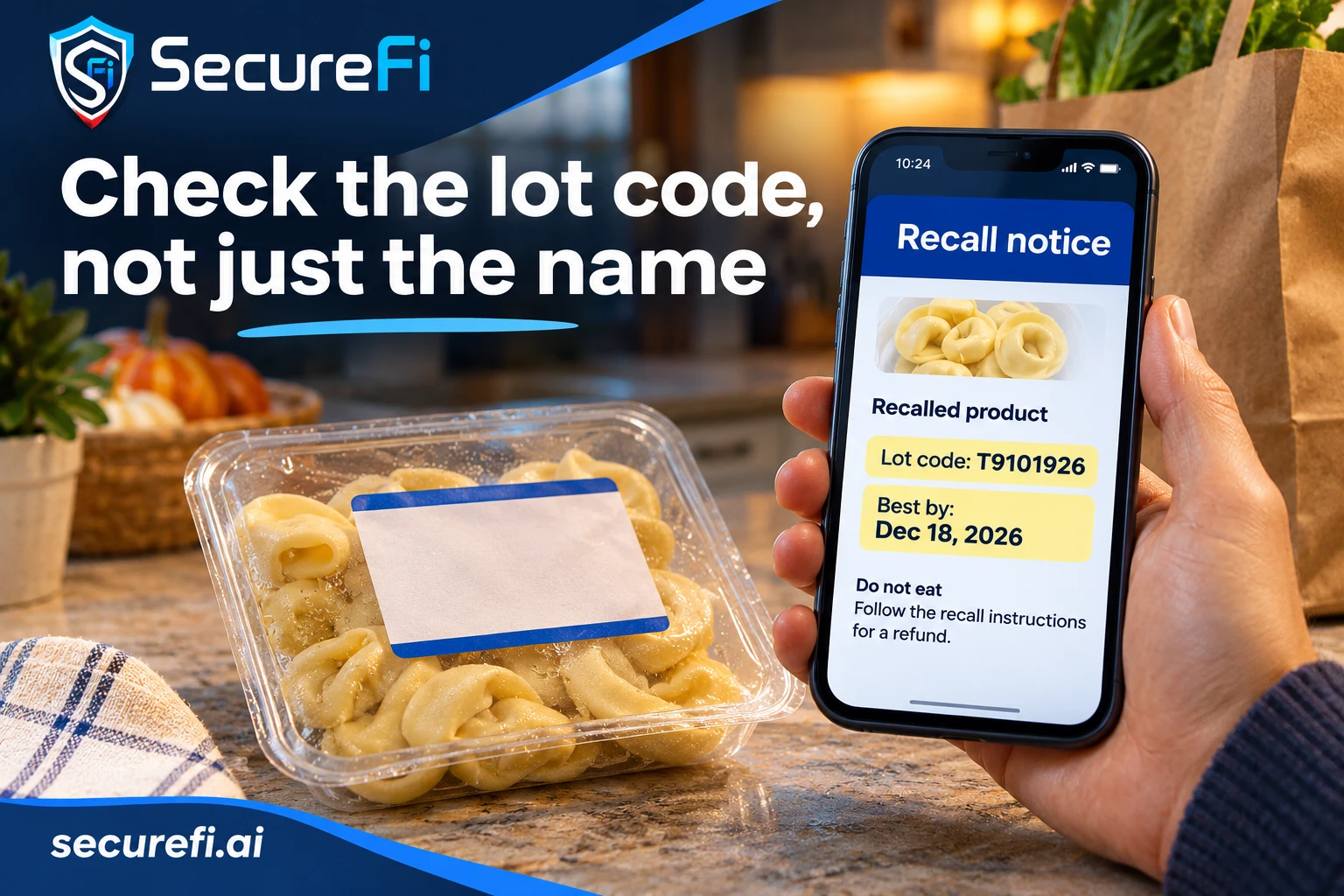
- Priano Protein Carbonara Tortelloni: 9-ounce package, lot T9101926, best by December 18, 2026.
- Priano Protein Herb & Cheese Tortelloni: 9-ounce package, lot T9101926, best by December 18, 2026.
The location matters. These products were sold in, and online from, ALDI stores in Alabama, Georgia, North Carolina and South Carolina.
ALDI reported no illnesses. It told customers not to prepare or eat the products, and to throw them away or return them to their local ALDI store for a full refund. Questions go to ALDI Customer Service at 844-484-0332.
Separate recalls, separate instructions
These are separate recalls from different companies. Their products, distribution areas, lot codes and instructions are not interchangeable.
A recall headline does not mean everything of that type is unsafe. It means you need to identify the exact product.
Three things worth checking
- The product name is only the beginning. Compare the brand, variety, package size, lot or batch code, and date against the original announcement.
- Location can matter. Some products are sold nationally; others reach only certain stores or states.
- Appearance is not a safety test. A food may look and smell normal even when the notice says not to eat it.
What you can do now
Before you cook for the holiday, check your refrigerator, freezer and pantry against official recall notices.
If you find a product that matches either notice, follow that recall's own instructions to throw it away or return it. If someone develops symptoms of a serious foodborne illness, get medical care promptly.
For other products, follow the instructions in their own recall announcements. Not every recall asks for the same response.
A familiar brand does not make every product safe. A recall doesn't make every product unsafe.
The difference is in the details.
When a Search Result Becomes a Cybersecurity Threat
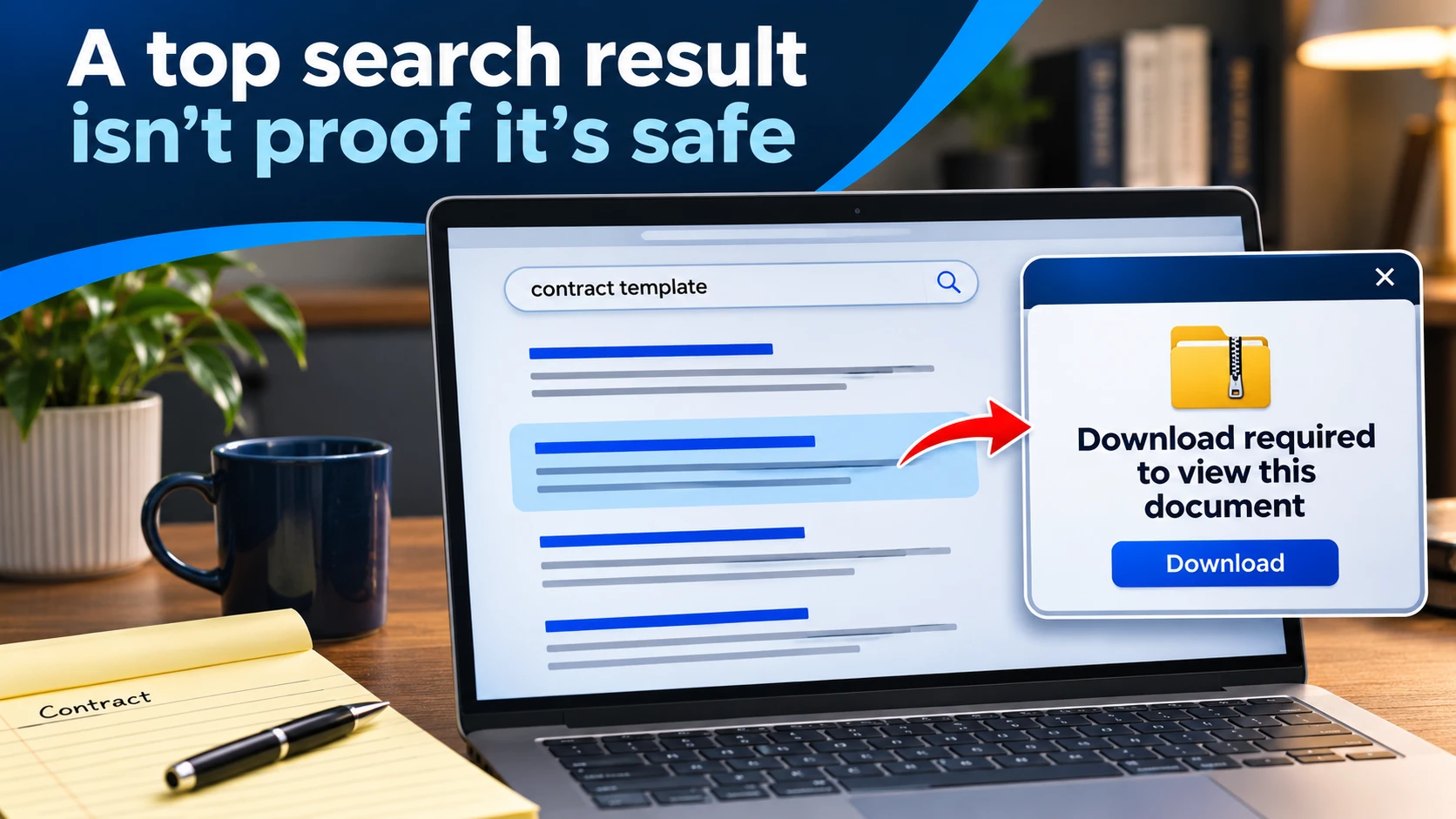
You search for a legal document, a business agreement or an answer to a technical question.
The results look ordinary. One leads to a website containing exactly the terms you searched for.
But the website has been compromised, and the file it offers may be malicious. This is the risk behind a threat called Gootloader.
You started the search, but the result may still be dangerous.
What happened
On November 12, the Department of Justice announced an international operation, with partners including Europol, that disrupted infrastructure used to spread Gootloader malware.
Authorities removed the malware from more than 100 servers, including compromised WordPress sites, and seized U.S. domain names used in the scheme. The Justice Department said Gootloader had infected at least 25,000 computers worldwide since 2018 and was tied to ransomware attacks on at least 44 U.S. victims, with approximately $28.8 million in losses.
On November 16, the FBI published an advisory explaining how the operation worked, with technical details and recommended defenses.
These figures describe activity across several years. They are not a count of infections or losses during Thanksgiving week.
How the threat reaches people
The technique is called search engine optimization poisoning, or SEO poisoning. Criminals manipulate search results so a compromised or malicious page appears when someone searches for a particular subject.
The FBI described compromised WordPress websites and carefully chosen searches, especially for legal language such as jurisdiction-specific contract clauses. It named attorneys, in-house counsel, law firms and legal departments among the people targeted.
A person may reach the malicious website through a normal search engine rather than a suspicious email. That is what makes the technique worth knowing about.
Does the takedown mean the threat is gone?
No. The operation disrupted the Gootloader infrastructure that was identified, but manipulating search results and exploiting compromised websites remain a risk.
The FBI advisory also gives technical details and mitigations organizations can use to check their exposure and strengthen their defenses.
Warning signs
- A search result unexpectedly asks you to download an archive, script or special viewing tool.
- A page says you must run a file before you can read an ordinary document.
- A website's content, download or file type does not match what you were looking for.
- A file from an unfamiliar website asks you to approve unusual security exceptions or steps to run it.
These are warning signs, not proof that every download is malicious.
What you can do now
For individuals: get documents, software and forms from trusted original sources. Don't run an unexpected downloaded file just because the search result looked credible.
For businesses, especially legal and professional-service firms: review the FBI advisory with your security team, and apply endpoint protection, access controls, software updates, monitoring and staff guidance.
If a suspicious file has already been opened on a work device, follow your organization's incident-response process instead of continuing to use the device normally.
Finding a website yourself does not make it trustworthy.
Search ranking measures relevance and other signals. It is not a guarantee of safety.
What you can do nowNot sure about a website or a download a search result led you to? Check the link before you open it.
Check a link →Medicare Open Enrollment: A Decision With a Deadline

A family member asks whether they should change their Medicare coverage.
They've received advertisements, phone calls, brochures and promises of extra benefits. One plan appears less expensive. Another advertises attractive extras.
But which plan actually covers their prescriptions, preferred doctors and ongoing healthcare needs?
That is the decision worth checking before December 7.
What's happening
Medicare Open Enrollment is underway and ends December 7. In a November 16 reminder, the Social Security Administration said people with Medicare can review and compare their current coverage and make changes for the coming year.
Depending on their circumstances, they may be able to change Medicare Advantage plans, switch between Original Medicare and Medicare Advantage, or join or change a Part D prescription drug plan.
Changes made during Open Enrollment take effect January 1, 2027.
People who are satisfied with their current coverage generally do not need to take any action. Reviewing next year's coverage is still worthwhile, because plans can change from year to year.
Why this is a risk intelligence story
Not every risk comes from a criminal. Sometimes the risk is making an important decision with incomplete information.
A plan's advertised premium may not reflect the full cost of care. A preferred doctor may be outside its network. A prescription may be covered under different rules.
These are not signs of fraud. They are things to verify before choosing a plan.
Misleading marketing can add to the confusion. Under Medicare's own marketing rules, plans and their agents aren't allowed to call or text you unless you're already a member or gave them permission, ask for bank or card numbers just to give you a quote, or pressure you to join a plan.
Five questions to ask before changing plans
- Are your doctors and healthcare facilities covered? Check the plan's current network and confirm important providers directly.
- What happens to your prescriptions? Review the specific medications, pharmacies, formulary rules and expected costs.
- What will you actually pay? Look beyond the monthly premium to deductibles, copayments, coinsurance and out-of-pocket limits.
- What changes in 2027? Compare next year's benefits with the coverage you have now.
- Who is advising you? Verify the representative or organization. Don't rush a decision because someone says an offer will disappear.
What you can do now
Review your options at Medicare.gov or call 1-800-MEDICARE (1-800-633-4227).
For free, independent help, contact your state's State Health Insurance Assistance Program, or SHIP.
If you're helping an older relative, support their ability to make an informed choice rather than assuming a heavily advertised plan is better.
The safest decision isn't always to change plans.
It's to understand what you have, what is changing and what an alternative would mean, before the deadline.
What you can do nowGetting calls about Medicare plans? Check who is really calling before you share your Medicare number.
Verify a caller →Also worth knowing this week
Retail Pricing: The Price on the Shelf May Not Be the Price at Checkout
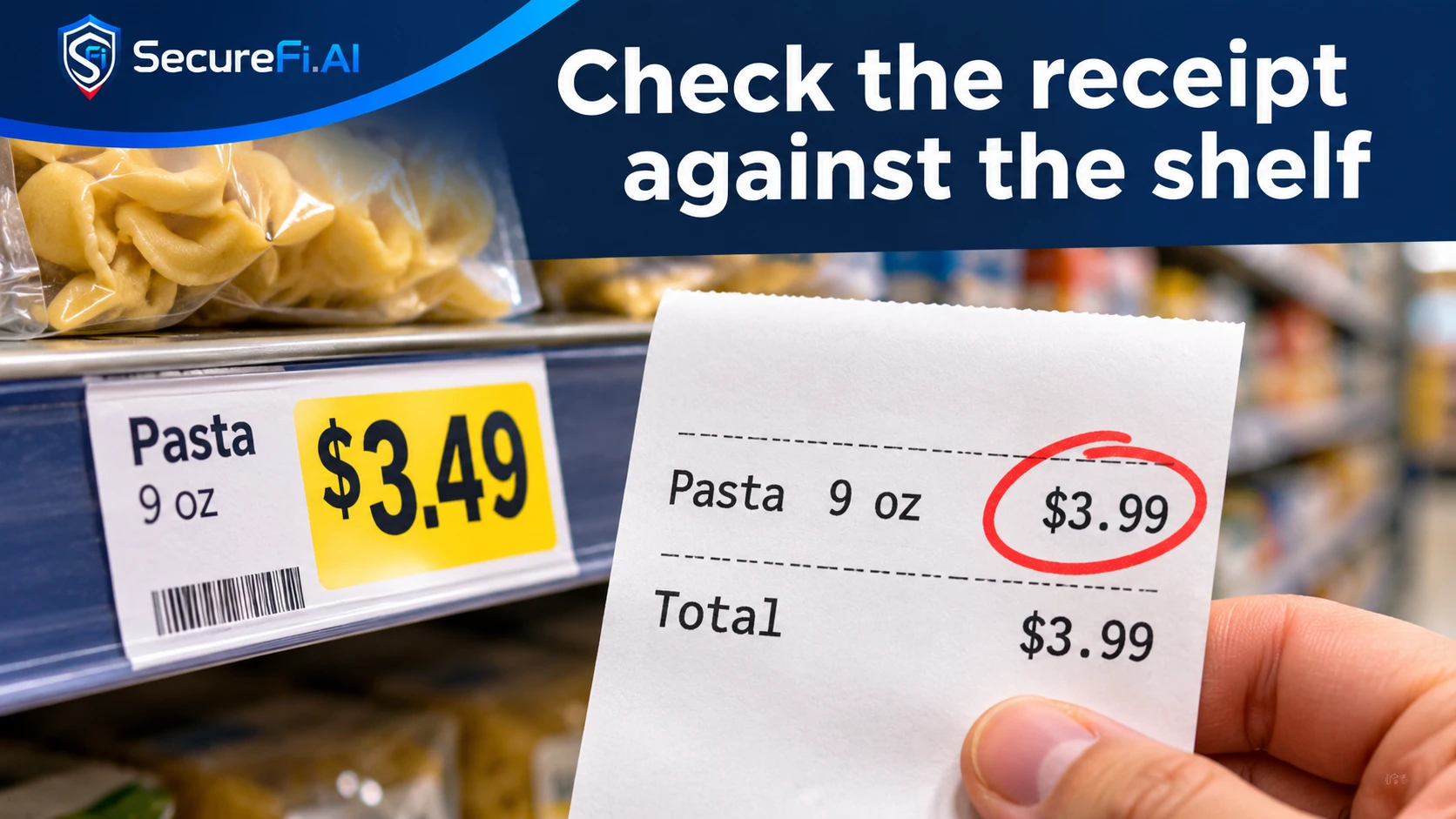
A price on the shelf says one thing. The register charges something else. For one purchase the difference may seem small. Repeated across many purchases and customers, it adds up.
On November 12, the FTC and 17 states announced a proposed $63 million settlement with Family Dollar over allegations that customers were charged more than advertised prices. It includes a $40 million consumer redress fund, a $20 million discount program for Family Dollar customers, and more than $3 million in payments to the states. A federal judge must approve it before it takes effect. Family Dollar must post notices about who is eligible for redress in its stores and on its digital platforms.
Separately, on November 18, Missouri announced a $5.3 million agreement with Dollar General resolving the state's pricing lawsuit. Dollar General contested the state's allegations. The agreement does not resolve the FTC's own case against Dollar General, which is still pending; on November 20, ten more states joined it.
What to do
Check receipts against advertised prices, keep evidence when they differ, and watch for official government or settlement-administrator notices about consumer relief. Don't assume every shopper is entitled to a refund.
Black Friday: A Familiar Retailer Name Doesn't Prove the Website Is Real
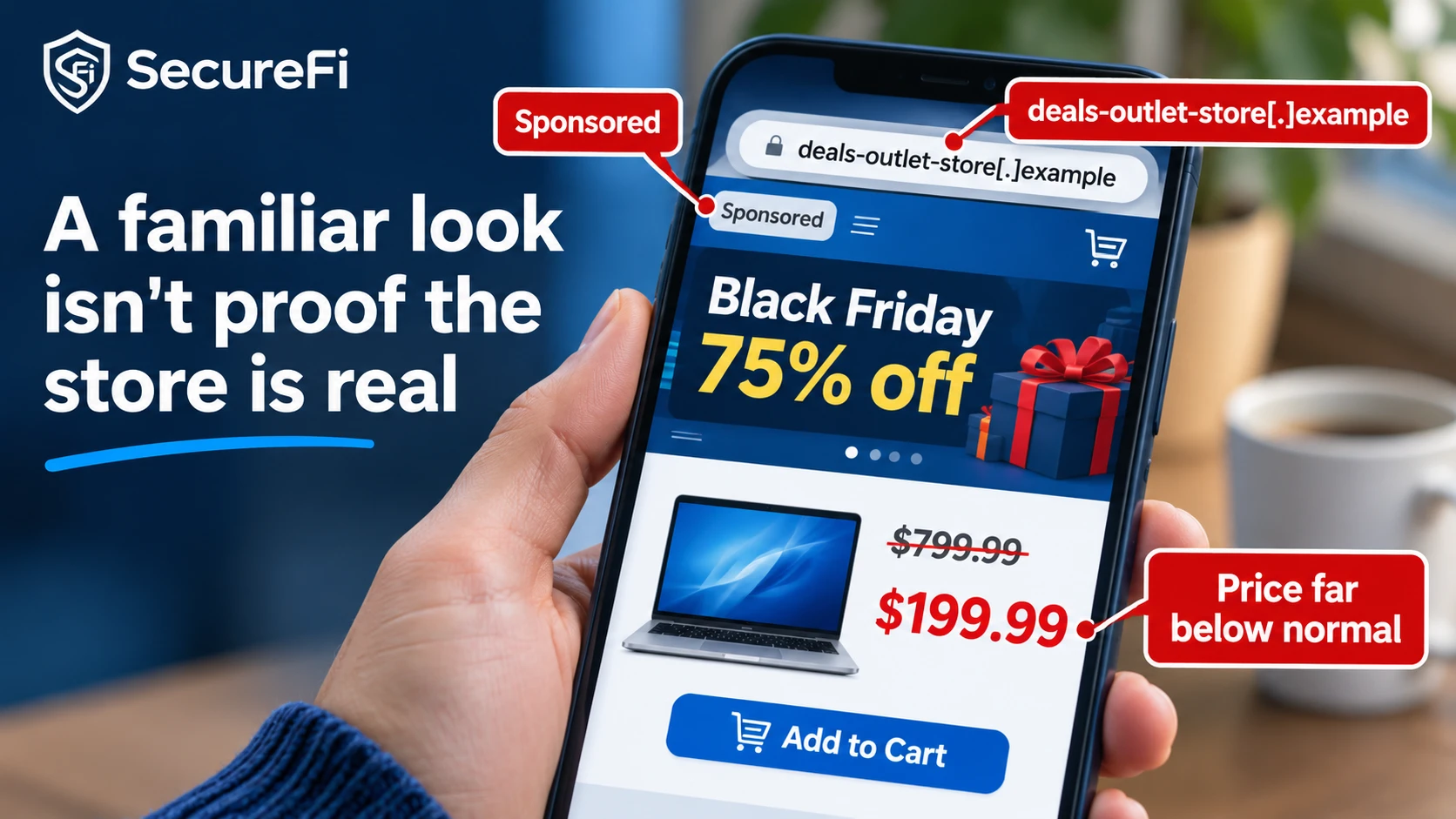
An ad offers a product at an unusually good price. The store logo looks familiar, the checkout page looks professional, and the result sits near the top of your search.
A convincing storefront and a prominent search position are not proof that the seller is legitimate.
In a November 19 consumer alert, the FTC warned about fake shopping websites appearing in search results, including paid ads near legitimate listings.
It is the shopping version of story 2: a search result's position is not proof that the site behind it is safe.
What to do
When you know the retailer, type its web address yourself instead of searching. When you have to search, the FTC suggests looking past the paid ads at the top and checking an unfamiliar seller by searching its name with "complaint" or "scam" before you pay.
What you can do nowFound a deal from a shop you don't know? Check the website before you pay.
Check a website →Giving Tuesday: Make Sure the Charity Gets Your Donation
Giving Tuesday falls on December 1, 2026. It's a chance to support causes that matter to you, but the rush of fundraising messages makes checking important.
Some scammers use real charities' names, or names that sound like them. Others pressure people to give before they have time to look into it.
What to do
Ask for the charity's exact name and research it yourself, including what others have said about it, before you give. Then give through the charity's own website rather than a link someone sent you.
If a charity says the only way to give is by cryptocurrency, wire transfer, a payment app or a gift card, the FTC says it's likely a scam. A credit card or check is the safest way to give. If a donation link leads to a crowdfunding page, the money goes to the organizer, so make sure you know who that is.
A legitimate cause deserves a verified way to give.
What you can do nowGot a donation request by text, email or social media? Check it before you give.
Check a request →Health Product Warning: Honey Can Contain Undeclared Prescription Drugs
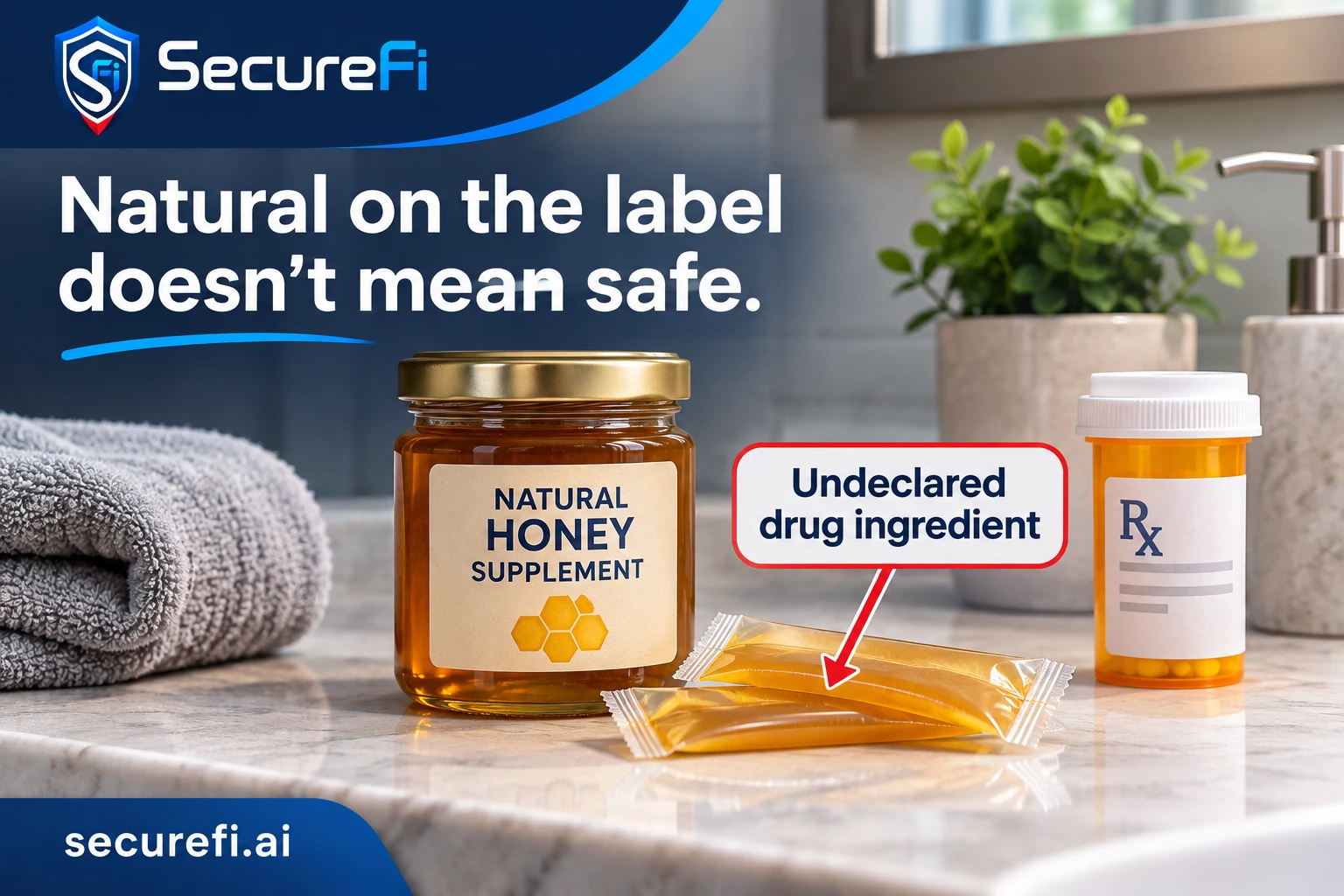
Some products sold as natural honey-based sexual enhancement supplements have contained prescription drug ingredients that are not listed on the label.
FDA laboratory testing has found sildenafil or tadalafil, ingredients in prescription medicines, in some of these products. These hidden drugs can interact dangerously with other medicines, including nitrates.
This is a standing FDA safety warning. It does not mean all honey products are unsafe, and it is not a new nationwide honey recall.
What to do
Don't assume a supplement is safe because it is sold as natural. Check the FDA's notices for the exact product, and ask a pharmacist or doctor about interactions with your medicines.
An ad for designer handbags at 85% off. The site went live last week and only takes payment apps.
Your Thanksgiving Week Checklist
A few minutes of checking can make a real difference.
- Before preparing meals: check food recalls and match the exact product details.
- Before opening a downloaded file: confirm the source and the file type make sense.
- Before changing Medicare coverage: compare 2027 benefits, costs, doctors and prescriptions.
- Before paying at checkout: check the price you're charged against the price you were offered.
- Before buying from an unfamiliar seller: verify the website and the business.
- Before donating: confirm the organization and where the payment goes.
- Before using a product sold as natural: check FDA warnings if its claims or ingredients raise concerns.
The SecureFi Takeaway: Know What to Check
Risk intelligence is not about treating everything as dangerous. It's about recognizing when a decision deserves more information. This week, that decision might concern:
- The food you serve.
- A document you download.
- A healthcare plan you choose.
- A purchase you make.
- A charity you support.
Know what to check. Verify what matters. Then decide with greater confidence.
SecureFi | Risk intelligence for everyday decisions.
Fraud and Scam Watch, in your inbox each week.
Warnings from official sources, and what to do. Get each new issue in your inbox: confirm your address and you’ll get the next one. No account needed.
Separate from product alerts. One-click unsubscribe in every email. See our Privacy Policy.
Edited by David Haberland · Published by SecureFi, Inc. · All Fraud and Scam Watch editions · New edition every week · Follow on LinkedIn · RSS